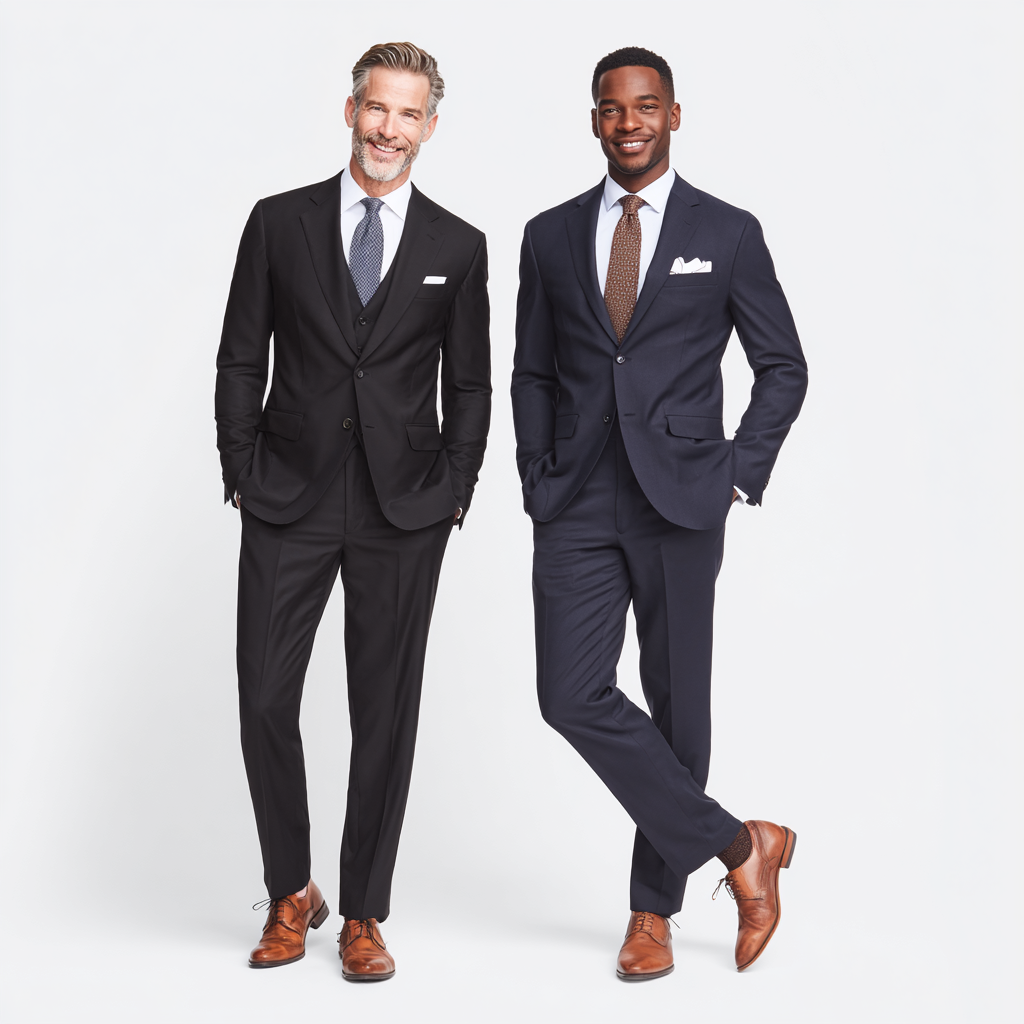
There's a piece of career advice that's been around for decades: dress for the job you want, not the job you have. It's repeated so often that it sounds like a cliché, but research actually backs it up. Studies on workplace attire have consistently found that more formal dress influences how peers, managers, and senior leaders perceive competence, authority, and trustworthiness. It also affects how you carry yourself, which is a real factor in how a promotion conversation tends to go.
So if you're trying to position yourself for a step up, what you wear matters more than people often admit. Here's a practical look at how to dress for a promotion, what the right business suit looks like, and how to think about your wardrobe as part of your career strategy rather than a separate problem.
Why Dressing for a Promotion Actually Matters
A promotion isn't usually decided in one moment. It's the cumulative impression you've built over months or years: how you handle pressure, how you communicate, how you carry yourself, and yes, how you look while doing all of it. Senior leaders often describe the package of these impressions as "executive presence," and clothing is part of it whether anyone says so out loud.
The point isn't that you have to dress like the CEO to get promoted. It's that looking like you already belong in the next role removes a quiet barrier. When a manager pictures you in a more senior position, the gap should feel small. A well-chosen business suit makes that mental leap easier for everyone involved, including you.
The good news is that dressing for a promotion isn't about spending a lot of money on flashy clothes. It's about a small number of intentional choices done well.
The Best Business Suit Colors For a Promotion
Color is the first thing people notice, and for promotion-level dressing, conservative wins almost every time.
The two business suit colors that consistently signal seriousness, competence, and leadership are:
-
Navy blue. The most versatile professional color. Navy reads as trustworthy and approachable, which is why it's the most common choice for interviews, client meetings, and presentations.
-
Charcoal grey. Slightly more formal than navy and the standard for higher-stakes meetings, leadership presentations, and conservative industries like finance and law.
If you can only own one promotion-ready suit, navy is the safer first pick. If you can own two, charcoal is the natural second. Black, despite what TV and movies suggest, isn't really a business color and tends to read as evening wear or formalwear rather than leadership attire.
The xSuit lineup carries the colors that work for this purpose: navy, charcoal, dark grey, and other deep neutrals that fit naturally into a senior-track wardrobe.
Fit Is the Most Important Factor in Looking Promotion-Ready
You can spend a lot of money on a suit and still look unprepared if it doesn't fit. You can also spend modestly and look sharp if the fit is right. Stylists and image coaches who work with executives say the same thing repeatedly: fit beats price.
A promotion-appropriate suit fit means clean shoulders that don't pull or pucker, a jacket that closes comfortably without straining, sleeves that show roughly a quarter inch of shirt cuff, and pants that break gently at the top of the shoe. Nothing should look tight, and nothing should look baggy. The cut should feel modern but not aggressive.
If your current suit doesn't quite fit, a tailor can usually fix it for under a hundred dollars, which is one of the highest-return investments in your professional wardrobe. If you're shopping new, brands like xSuit use a "modern fit" cut, slightly tapered through the chest and waist, that hits the standard most workplaces expect today without leaning too slim or too boxy.
Choosing a Business Suit That Holds Up Through Long Days
A promotion-track schedule isn't easy on clothes. You're in early, you're in long meetings, you're traveling more, you're presenting in conference rooms with bad lighting. The suit you wear has to look as composed at 5 p.m. as it did at 8 a.m.
This is where fabric and construction quietly do a lot of work. Traditional wool looks great when freshly pressed but wrinkles under pressure and needs regular dry cleaning to stay sharp. Performance suits are built specifically to handle long days. The xSuit 5.0, for example, uses a TechWool blend, a wool-based fabric engineered with stretch and wrinkle resistance, and the entire suit is machine washable rather than dry clean only.
For someone trying to look polished day after day without managing a wardrobe maintenance schedule, that practicality is meaningful. You're not winning a promotion because of your fabric choice, but you're also not losing one because your jacket looked exhausted by the afternoon.
Shirt, Tie, and Shoes: Completing the Promotion-Ready Look
The suit is the foundation, but the supporting pieces matter.
For shirts, white and light blue are the safest choices and pair well with both navy and charcoal. They're clean, professional, and don't compete with your face for attention. Subtle patterns are fine if you already have the basics covered. Cotton with a structured collar holds its shape better than cheaper blends.
For ties, conservative wins again. Solid or subtly patterned ties in navy, burgundy, or grey work for nearly every promotion-track moment. Skip novelty ties, very wide patterns, or anything that feels like a personality statement.
For shoes, polished black or dark brown leather oxfords or derbies are the standard. Match your belt to your shoes. Replace shoes when they're scuffed beyond easy repair. Senior leaders consistently say that shoes are one of the first details they notice on more junior employees, partly because polished shoes signal that you pay attention to the small things.
Common Mistakes Men Make When Dressing for a Promotion
A few mistakes show up over and over in promotion-track wardrobes. Watching for them can save real ground.
People often dress for the job they have rather than the next one. If your current peers dress smart casual, dressing slightly above that level (a blazer, a tucked-in shirt, dress shoes) helps you stand out without looking out of place. Others go too far the other direction, showing up overdressed in a context where it reads as performative. The right calibration is one notch above your team's average, not three.
Another common mistake is buying trendy details that look distinctive now and dated quickly. Promotion wardrobes should lean classic. Wide lapels, heavy patterns, or unusual cuts age poorly and don't help your case. Stick to clean, conservative shapes.
Finally, neglecting grooming undercuts everything else. Tidy hair, clean nails, polished shoes, and minimal cologne quietly support a sharp suit. A great suit on a disheveled person sends a worse signal than a modest outfit on a put-together one.
The Best Business Suit For a Promotion: Putting It All Together
The right business suit for getting promoted is a clean, conservative one in navy or charcoal, in a fit that's modern but not extreme, in a fabric you can actually maintain on a busy schedule. Add a white or light blue dress shirt, a quiet tie, polished leather shoes, and consistent grooming. That formula has worked for decades, and it still works because it focuses attention on the person rather than the clothes.
If your current schedule doesn't leave room for dry cleaning runs, a performance suit like the xSuit 5.0 is a practical option since it stays sharp through long days, travels well, and is machine washable. If you already own a quality wool suit, getting it tailored and pressed is enough. Either way, the goal is the same: walk into every meeting looking like the person who's clearly ready for the next role. The promotion conversation goes a lot easier when the picture already fits.