Virtual interviews have a weird superpower: they make small details feel huge.
On a video call, the camera crops the outfit, compresses color, flattens texture, and turns a collar gap or shiny fabric into a bigger “thing” than it would ever be in person. Add nerves, imperfect lighting, and a laptop camera pointed slightly upward and it becomes clear fast: virtual interview style is its own skill.
The goal is simple: look credible, sharp, and calm. The outfit should support the conversation, not compete with it. But should you where a polo? A nice business suit?
This guide breaks down what consistently works on camera, what to avoid, and how to build a virtual-interview look that feels professional without feeling like a costume.
Why Virtual Interview Outfits Matter More Than They Should
In-person interviews come with context: the lobby, the handshake, the full outfit, the energy of the room.
Virtual interviews cut most of that away. What remains is a face, shoulders, voice, and a rectangular frame. That is why clothing reads as a stronger signal on video. It becomes part of the “first impression” package.
A strong virtual interview outfit does three things:
-
Creates clean lines around the face and neck
-
Avoids distracting patterns, shine, and color casts
-
Looks intentional without looking overdressed for the role
The Baseline: Match The Company’s Dress Code, Then Go One Step Cleaner
“Dress for the job” is still the rule. On video, the interpretation needs a slight adjustment: lean conservative in fit and finish, not necessarily in formality level.
A simple approach works across most industries:
-
Traditional corporate roles (finance, law, executive track): suit jacket, dress shirt, tie optional depending on seniority and norm
-
Standard corporate and tech roles: blazer or suit jacket, dress shirt or polished knit, tie optional
-
Creative fields: blazer or structured jacket, elevated shirt, personality through texture not loud pattern
The core principle stays the same: the outfit should look like it belongs in a serious conversation about responsibility and results.
Start With The Camera Crop: The Top Half Is The Interview Outfit
A virtual interview outfit is mainly a “head-and-shoulders” outfit. That does not mean the lower half can be ignored, but the top half is where the decision-making should start.
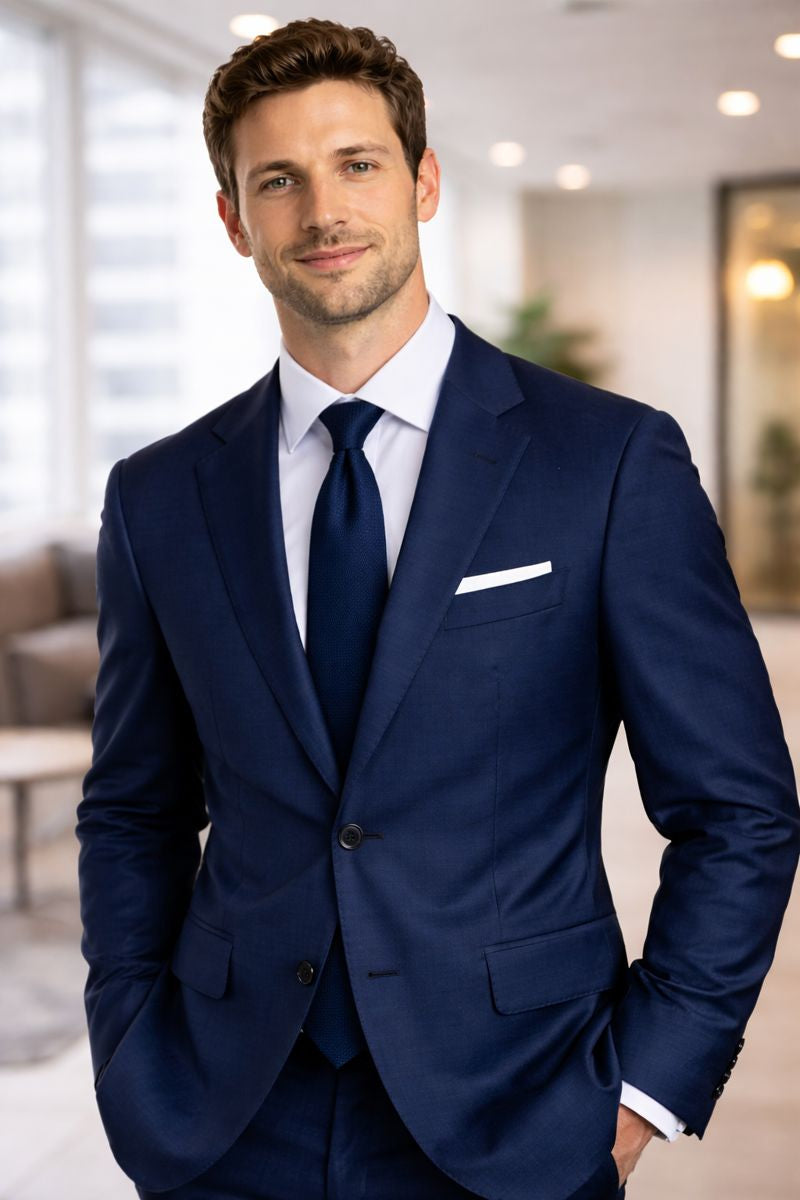
The Jacket: Blazer Or Suit Jacket Beats A Shirt-Only Look Most Of The Time
A jacket is the fastest way to add structure on camera.
It sharpens the shoulders, improves posture visually, and signals professionalism without needing a lot of extra effort. Even in business-casual industries, a blazer often reads as “prepared” rather than “stiff.”
Jacket tips for video:
-
Stick to matte or low-sheen fabrics
-
Avoid loud texture that turns grainy on camera
-
Make sure the shoulders sit cleanly; shoulder fit is obvious on video
A performance-oriented suit jacket can be a smart choice for virtual interviews because comfort reduces fidgeting. The key is that it still needs to look like real tailoring: clean lapels, crisp lines, no athletic-looking details.
The Shirt: Clean Collar, Crisp Color, No Drama
The shirt frames the face. If the collar is collapsing, gapping, or fighting the neck, the whole look feels less polished.
Safest shirt colors on camera:
-
White
-
Light blue
-
Soft blue-white stripe (very subtle)
Patterns can work, but they need discipline. On a webcam, tiny busy prints can create a flicker effect that looks distracting.
Shirt details that matter more on video than in person:
-
Collar shape and crispness
-
Wrinkles around the placket and shoulders
-
The top button area: especially if wearing a tie
Tie Or No Tie: Decide Based On Role, Then Commit
A tie is not required for every virtual interview, but when it is worn, it should look deliberate.
When ties usually help:
-
Conservative industries
-
Client-facing roles
-
Senior roles where authority signals matter
When a tie can be skipped:
-
Many modern corporate and tech environments
-
Roles where business-casual is clearly the norm
-
Second-round interviews where the culture is already established
If skipping the tie, the shirt and jacket need to be sharper. A rumpled open collar under a jacket reads less like “relaxed” and more like “unprepared.”
Color Rules For Video: What Looks Sharp On Camera
Video compresses contrast and shifts color depending on lighting. Strong outfit colors are the ones that stay clean under imperfect conditions.
Best Jacket Colors For Virtual Interviews
-
Navy
-
Charcoal
-
Mid-grey (depending on lighting and background)
These colors look professional without harsh contrast and they work with the safest shirt colors.
Colors And Fabrics To Be Careful With
-
Pure black jackets: can look severe; also crush detail on camera under low light
-
Bright white shirts under harsh light: can blow out and look glaring
-
Shiny fabrics: reflect light and create hotspots
-
High-contrast micro-patterns: can shimmer or moiré
If a jacket fabric has noticeable shine in mirror light, it will likely shine more under a ring light or window glare.
Fit Matters More Than People Expect: The “No-Fidget” Rule
One of the biggest tells in virtual interviews is constant adjustment: tugging collars, fixing lapels, shifting in the chair.
Fit solves that.
A good interview fit has these traits:
-
Collar sits comfortably when buttoned
-
Jacket closes without pulling at the button
-
Sleeves show a small amount of cuff, not half the forearm
-
Nothing feels tight when sitting
Comfort is not a luxury here. Comfort is performance. When the outfit disappears mentally, the conversation improves.
Pants Still Matter: Avoid The “I Didn’t Expect To Stand Up” Problem
Most virtual interviews are seated. Many virtual interviews also include surprises:
-
Standing to adjust the camera
-
Walking to fix audio
-
Ending the call and forgetting the camera is still on
Wearing real trousers is not about fear. It is about professionalism as a habit.
Best options:
-
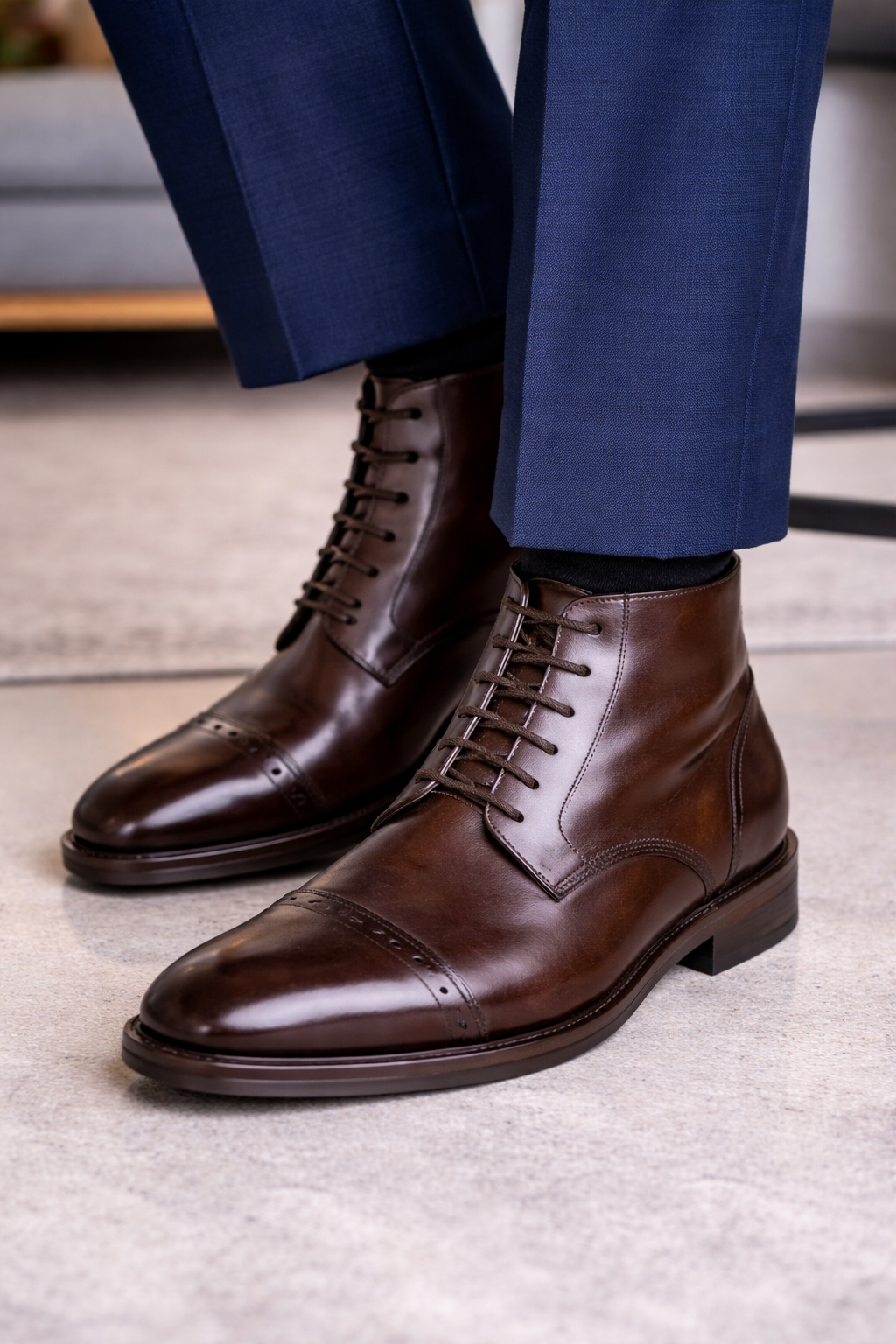
Matching suit trousers
-
Dress trousers in a neutral color
-
Dark chinos if the company is clearly business-casual
Avoid athletic shorts, loud patterns, and anything that changes posture or confidence. The lower half affects how a person sits and moves, even when it is not visible.
Grooming And Accessories: Keep It Clean, Keep It Quiet
Virtual interviews amplify shine, stray hairs, and overly reflective accessories.
Simple guidelines:
-
Hair: tidy, away from the face
-
Facial hair: shaped and clean
-
Skin: reduce shine if needed (even a quick dab helps)
-
Jewelry: minimal and non-reflective
-
Watch: fine; bracelets and loud pieces often distract
Glasses deserve special attention. Lens glare can hide eye contact. Tilting the light source or lowering it often fixes this.
The Setup Is Part Of The Outfit
A great outfit can still look mediocre with bad lighting and an awkward camera angle.
A strong setup includes:
-
Camera at eye level
-
Face lit from the front or slightly to the side
-
Background clean and non-distracting
-
Sound checked and stable
If the lighting is harsh, softer colors and matte fabrics matter even more. If the background is bright, darker jackets can help balance the frame.
The 5-Minute Test Run That Prevents Most Mistakes
Before the interview, a quick test run catches most problems that would otherwise show up during the call.
Checklist:
-
Turn on the camera and sit in interview posture
-
Look for collar gaps, wrinkles, glare, and shine
-
Check how the shirt reads: too bright, too blue, too patterned
-
Move naturally: does the jacket pull or shift
-
Confirm the background does not compete with the face
This is also the moment to check lint and pet hair, which cameras love to highlight.
Common Virtual Interview Outfit Mistakes
These show up constantly, even among smart candidates.
-
Wearing a shirt with a collapsing collar
-
Choosing a tie that is too loud or glossy
-
Using micro-checks or tiny patterns that shimmer on camera
-
Wearing a jacket that pulls at the button when seated
-
Having a bright window behind the chair
-
Trying to look “casual and confident” but landing on “casual and underprepared”
The fix is rarely complicated. It is usually a simpler shirt, a darker jacket, or better lighting.
The Best Virtual Interview Outfit Is Calm And Intentional
Virtual interview dressing is not about peacocking. It is about clarity.
The strongest looks on camera share the same traits: structure at the shoulders, a clean collar, simple colors, matte fabrics, and a fit that does not require constant adjustment. When those pieces are in place, the outfit stops being a factor.
That is the real win.
Not “best dressed.” Just sharp, credible, and focused; exactly where an interview should live.