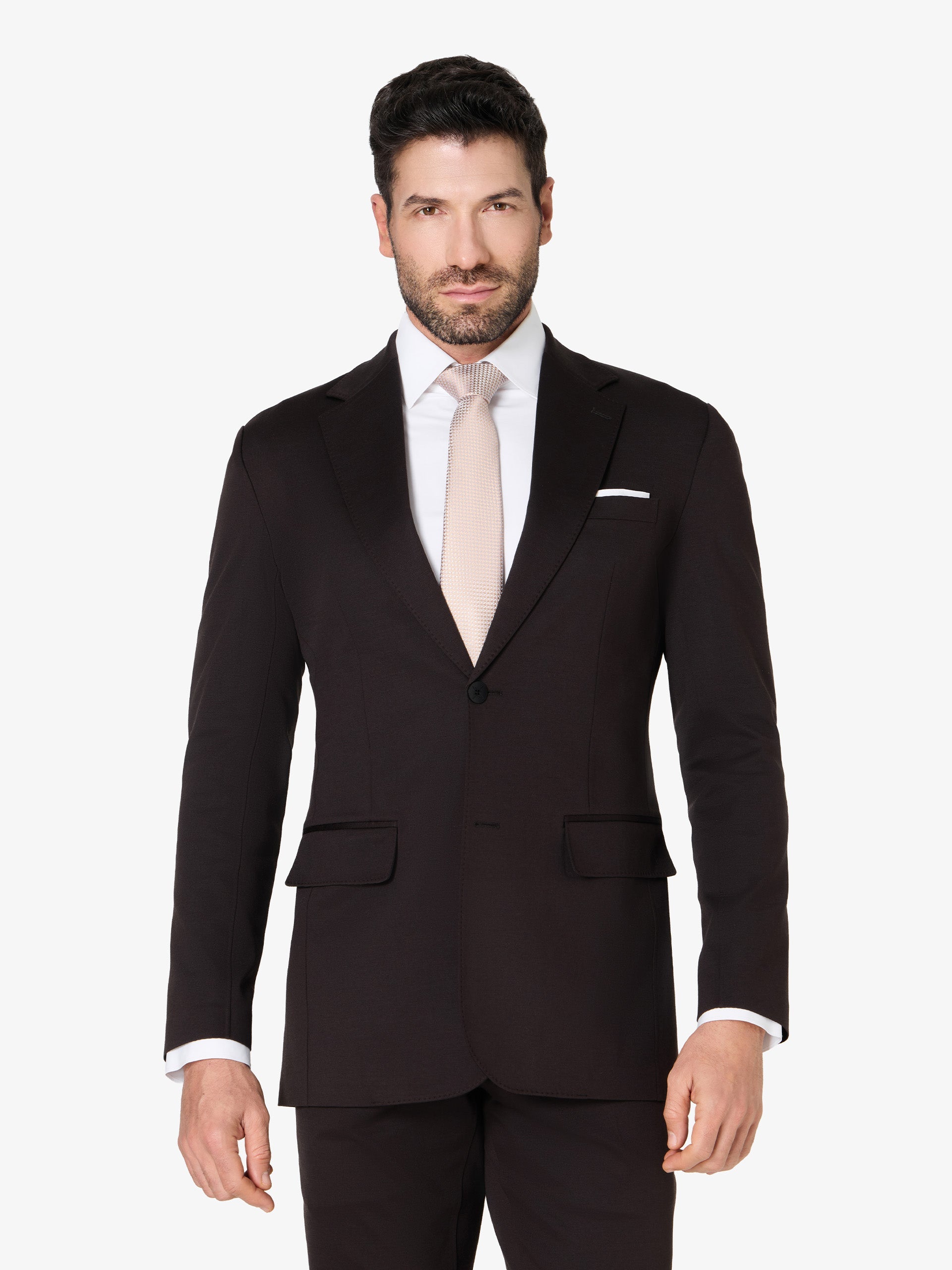
A scarf can make a nice business suit look more intentional, not more complicated. The problem is that most men either treat a scarf like a random winter add-on, or they go full fashion mode and end up looking like they are headed to a photoshoot instead of a meeting.
The goal is simple: stay warm, keep the suit sharp, and look like you meant to do it.
Start with the job the scarf is doing
A scarf with a business suit usually has one of two roles.
First, it can be a practical layer for commuting: warmth outdoors, then off indoors. Second, it can be a style layer that stays on inside, usually in more relaxed business settings. Those roles have different rules. If you know which one you are aiming for, you stop guessing.
Most of the time, a scarf should come off once you are in the building. That is not a hard rule, but it is the safest default in conservative offices.
Choose the right scarf, or the rest is pointless
A suit already has structure. Your scarf should support that structure, not fight it.
Fabric: keep it refined
Wool, cashmere, and wool blends are the sweet spot. They drape well, insulate, and look appropriate with tailored clothing. Silk can work in milder weather as a dressier accent, but it is not a winter substitute.
Chunky knits, heavy fringes, and bulky infinity scarves tend to look casual. They can be great with a peacoat and jeans, but with a business suit they often overpower the lapels and make the outfit look top-heavy.
Width and length: less volume, more control
For suits, choose a scarf that is medium width and long enough to wrap without needing a huge knot. Too short looks cramped. Too long looks theatrical unless you have a coat on and you are outside.
Color and pattern: make it easy to match
If you want the simplest scarf strategy, stick to solids or quiet patterns.
A few safe options that work with most suits:
-
Charcoal, navy, or black scarves for maximum compatibility
-
Camel or mid-gray for contrast with darker suits
-
Subtle herringbone or small checks for texture without noise
Loud patterns can work, but they raise the difficulty. If you are wearing a patterned tie and a patterned scarf, something will clash. The scarf should not be competing with your tie for attention.
Scarf plus suit starts with the coat, not the scarf
Most business-suit scarf outfits are really about outerwear. If you are wearing a suit in cold weather, the coat does the heavy lifting. The scarf finishes it.
A scarf looks best with a tailored overcoat. It also works with a trench coat. With shorter casual jackets, a scarf can still work, but the overall look becomes less “business suit” and more “smart casual with a suit jacket.”
If you are skipping a coat and relying on a scarf alone for warmth, the outfit is going to look strained. The suit will not stay comfortable, and the scarf will look like it is trying to do a job it cannot.
The three scarf drapes that always look right with a suit
You do not need ten knots. You need a few that look clean and stay put.
1) The simple drape
Just place the scarf around your neck with both ends hanging down evenly.
This is the best option when you are wearing a buttoned coat and you want a clean line. It looks sharp, it is fast, and it does not add bulk around the collar.
2) The once-around
Wrap the scarf once around your neck and let the ends hang.
This is the most useful style for commuting. It keeps warmth in without creating a thick knot. It also looks natural with a suit because the scarf line follows the lapels.
3) The European loop, done quietly
Fold the scarf in half, place it around your neck, then pull the loose ends through the loop.
This works best with thinner scarves in wool or cashmere. Keep it snug but not tight, and avoid making the loop huge. The goal is neat, not dramatic.
If the knot becomes a centerpiece, it is too much for business settings.
Tie or no tie: how the scarf changes the rules
If you are wearing a tie, the scarf should be simpler. A solid scarf with a subtle texture is ideal. Keep it outside the tie in most cases, especially if you are wearing a coat. The scarf is part of outerwear styling, and the tie belongs to the suit.
If you are not wearing a tie, you have more freedom. A scarf can become the “finished” element that replaces a tie. In that case, the once-around or a clean loop can look great, especially when the shirt collar is open by one button.
The key is restraint. The scarf should add polish, not pretend to be a statement necklace.
Suit color pairings that work every time
Suits already carry a color story. Make scarf selection easier by pairing with intention.
Navy suit
Charcoal, gray, camel, or burgundy scarves work well. Navy on navy can look great too, but use texture to keep it from going flat.
Charcoal or gray suit
Black, navy, deep green, or a lighter gray scarf gives contrast without looking loud.
Black suit
Keep it simple. Charcoal or black is safest. If you want color, stay deep and muted, like burgundy or dark green, and avoid bright patterns.
Brown or tan suit
Camel, cream, dark brown, navy, and forest green tend to work best. A scarf with a subtle earth-tone pattern can also look natural here.
How to wear it indoors without looking odd
In many offices, wearing a scarf indoors reads like you forgot to take it off. If you want to keep it on, do it in a way that looks deliberate.
A thinner scarf in wool, cashmere, or silk works better indoors. Keep the drape simple and avoid bulky knots. If you are seated at a table, a scarf that spreads out can look messy fast, so consider taking it off once you settle in.
As a general rule, the more formal the environment, the more likely the scarf should come off after you arrive.
Common mistakes that make a scarf look wrong with a suit
Most scarf errors are volume and contrast problems.
A chunky scarf that overwhelms your lapels. A bright scarf that fights your tie. A knot that looks like a climbing rope. Wearing a casual scarf with a shiny dress suit. Letting the ends hang too long and sloppy when you are inside.
The fix is usually simple: slimmer fabric, calmer color, and a cleaner drape.
The quick checklist before you leave the house
Your scarf should pass three tests.
First, does it sit neatly under or over the coat collar without bunching. Second, does it respect the suit’s level of formality. Third, does it look natural with the rest of your outfit, not like a separate costume piece.
If the answer is yes, you are done.
Bottom line
Wearing a scarf with a business suit is less about learning knots and more about choosing the right scarf and keeping the styling controlled. Stick to refined fabrics, calm colors, and simple drapes. Use the scarf as the finishing layer for your coat and commute, and do not be afraid to take it off once you are inside.
It is a small detail, but when it is done right, it makes the whole suit look more composed.