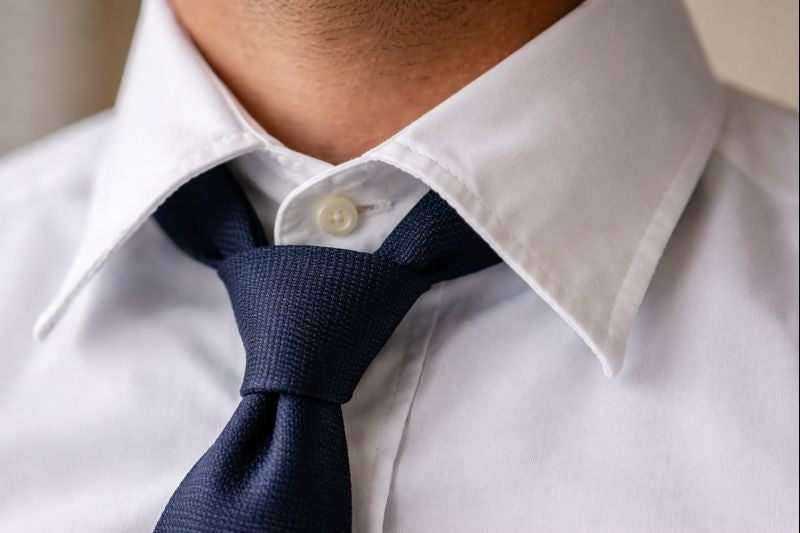
“Non-iron” sounds like a promise: wash it, hang it, and walk out the door looking crisp. Then reality shows up. You pull the shirt from the dryer and it has crease lines at the placket. The sleeves look like they were folded by an angry toddler. The collar is fine, but the body is rumpled and even a good suit jacket and slacks couldn’t save it.
Here’s the truth: non-iron is a performance feature, not a force field. It reduces wrinkling and makes shirts easier to smooth out, but it cannot override everything that happens in the wash, dryer, suitcase, or on your body during a long day.
The good news is that most non-iron wrinkling is predictable. That means it’s fixable.
What “non-iron” actually means
Non-iron shirts are typically treated or engineered to resist wrinkles and hold a smoother surface after laundering. That might involve fabric finishing, resin treatments, tighter weaves, or blends designed to recover shape better than a standard cotton shirt.
But even the best non-iron fabric still behaves like fabric. If you crush it, overdry it, leave it in a heap, or pack it badly, it will wrinkle. The difference is that a non-iron shirt should bounce back faster with minimal effort. If it isn’t, something in the process is working against it.
The most common reason: leaving it in the washer too long
This one is boring, and it causes an amazing amount of frustration.
Wrinkles set when fabric dries in a folded, compressed state. If a shirt sits wet in the washer, it is basically marinating in creases. Non-iron fabric helps, but it cannot fully erase hard-set folds that have been pressed into place for an hour.
The fix is simple: take the shirt out promptly. Shake it out. Smooth the placket and collar with your hands. Then hang it or move it to the dryer right away. That one habit solves more “my non-iron shirt still wrinkles” complaints than any special spray.
Overdrying: the silent wrinkle multiplier
High heat and extra time in the dryer can make non-iron shirts look worse, not better. When cotton overdrys, it locks wrinkles in. That is why a shirt can come out warm and still look creased.
Instead, aim to remove the shirt while it is just barely damp or at least not cooked dry. Hang it immediately. Smooth it with your hands. Let gravity finish the job. You will get a cleaner result and you will extend the life of the fabric finish.
If you use a dryer, keep the load size reasonable. Shirts need room to tumble. Overstuffing the dryer turns it into a wrinkling machine.
Washing settings that fight the fabric
Non-iron shirts often respond best to gentler washing than people assume. Aggressive cycles, heavy spin, and too much detergent can create their own problems.
A hard spin can twist sleeves and create sharp creases at the seams. Too much detergent can leave residue that affects how the fabric relaxes. Fabric softener can add buildup that makes a shirt feel slick but behave worse over time.
You do not need a complicated routine. A normal or gentle cycle, a reasonable amount of detergent, and a thorough rinse usually get you closer to that “hang and go” result.
Water quality and heat: yes, it matters
If a non-iron shirt never seems to look truly smooth, even when you do everything “right,” water can be part of the story.
Hard water minerals and excessive heat can affect fabric finishes and contribute to stiffness that wrinkles rather than drapes. This varies a lot by location, so it is not always the culprit. But if your shirts are coming out with a slightly rough hand feel or they seem to hold creases, it is worth testing a cooler wash temperature and making sure the rinse is doing its job.
Packing and travel: non-iron is not crush-proof
Non-iron shirts do better in suitcases than standard cotton. They still hate being stuffed.
A shirt packed tightly under heavy shoes will wrinkle. A shirt folded with hard creases will show those crease lines. A shirt compressed in a carry-on that gets shoved under a seat will lose the battle.
If you travel often, the move is to minimize pressure and sharp folds. Fold with fewer hard creases, place the shirt near the top of the stack, and unpack as soon as you arrive. Hanging a shirt in a bathroom during a hot shower can also help relax light wrinkles fast.
Fit is a wrinkle factor most people ignore
Wrinkles form where fabric is stressed, pulled, or compressed. That means fit matters.
If a shirt is too tight across the chest or arms, it will crease as you move. If it is too loose, excess fabric will bunch and fold when you sit. Even a non-iron finish can’t stop physics.
If you consistently get wrinkles radiating from the button placket or pulling at the shoulders, you may be fighting a sizing issue rather than a laundering issue. The shirt is being forced into new shapes every time you move.
The shirt may be “non-iron,” but your routine still needs one finishing step
People hear “non-iron” and assume the shirt will come out of the dryer ready for a board meeting. Sometimes it does. Often it needs a quick reset.
That reset does not have to be a full iron session. It can be a 30-second move: hang the shirt, smooth it with your hands, and use light steam if needed. Non-iron shirts respond well to quick steaming because the fabric is designed to relax.
If you want to avoid tools entirely, the best substitute is timing. Pull it out earlier, hang it immediately, and let it finish drying on the hanger. That is how non-iron performs at its best.
When the non-iron finish wears off
Non-iron performance is not always permanent. Over time, repeated washing, high heat drying, harsh detergents, and heavy use can reduce the effectiveness of the finish.
If a shirt used to look crisp with minimal effort and now it looks tired no matter what you do, it may not be your technique. It may simply be a shirt that has reached the point where it needs a little more help than it used to.
That does not mean it is trash. It just means it has moved from “hang and go” into “hang and quick steam.”
Quick fixes when you’re already wrinkled
Sometimes you are ten minutes from leaving and the shirt is not cooperating. In that moment, you need solutions that work fast.
Steam is usually the quickest. A handheld steamer is great, but a hot shower and hanging the shirt nearby can help with light wrinkles. If you must use an iron, focus on high-visibility zones: collar, placket, cuffs. You do not need to press the entire shirt for it to look sharp in a jacket.
Also, do not underestimate a clean hang. Button the top one or two buttons, align the placket, and let it hang straight for a few minutes. Gravity can do more than people expect.
Bottom line
Non-iron shirts still wrinkle because “non-iron” reduces wrinkles, it does not eliminate the causes of wrinkles. The biggest culprits are leaving shirts sitting wet, overdrying on high heat, overloading the washer or dryer, packing too tightly, and wearing a shirt that does not fit well.
Fix the process and non-iron will start behaving like it should: not perfect, but reliably smooth with very little effort. That is the real win.