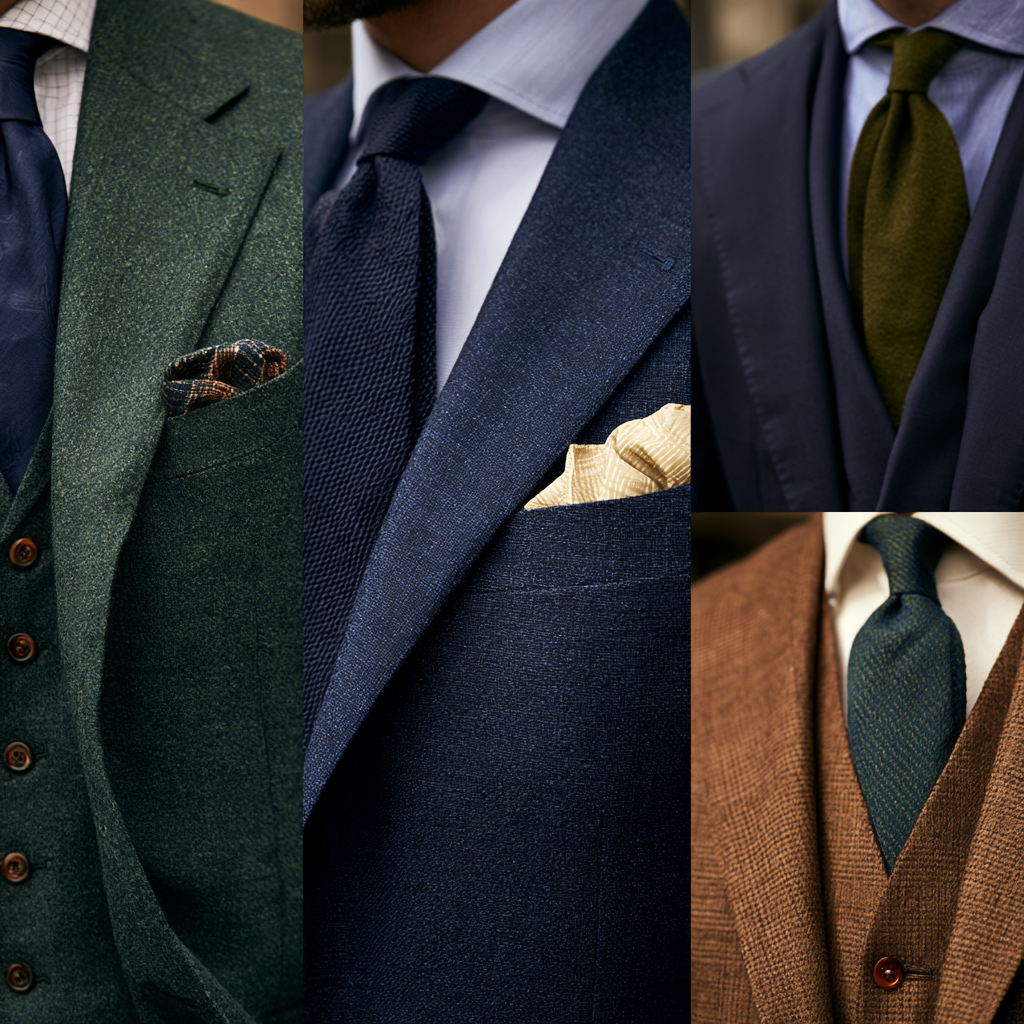
The short answer: Yes, a well-made stretch suit is professional enough for most offices, job interviews, client meetings, and weddings. Stretch on its own doesn't make a suit look casual. What matters is how the suit looks: a classic color, a fabric with a matte, suiting-like finish, a clean tailored fit, and conservative details. Stretch suits that look sporty, shiny, or skin-tight are the ones that read as unprofessional. For black-tie events or very traditional workplaces, a tuxedo or a classic wool suit may still be the safer choice.
If you've ever spent a full day in a stiff suit, the appeal of stretch is obvious. You can sit, reach, commute, and travel without feeling restricted. The hesitation usually comes down to one worry: will people be able to tell, and will it look less serious? That's a fair question, so let's look at what actually makes a suit read as professional.
What Makes Any Suit Look Professional

Before stretch even enters the conversation, it helps to remember what people notice when they look at a suit. Almost nobody inspects the fabric composition. They react to the overall impression, which comes from a handful of things:
-
Fit. Shoulders that sit cleanly, sleeves that show a little shirt cuff, and trousers that aren't pooling or straining.
-
Color. Navy, charcoal, mid-grey, and black read as business-appropriate almost everywhere.
-
Fabric appearance. A matte or softly textured surface looks like traditional suiting. A strong sheen looks cheaper or more casual.
-
Condition. Wrinkles, stains, and a jacket that's lost its shape undermine even an expensive suit.
-
Styling. A crisp shirt, a quiet tie, polished shoes, and a matching belt finish the picture.
Notice that stretch isn't on that list. In practice, a suit that stays smooth and holds its shape through the day can actually look more professional by 5 p.m. than a traditional suit that creased on the morning commute.
How Stretch Affects Whether a Suit Looks Professional
"Stretch suit" covers a wide range of garments, and that's where the confusion comes from.
At one end are traditional wool suits with a small amount of stretch added for comfort. These look identical to classic suits.
In the middle are performance suits built around stretch fabrics designed to look like suiting. Quality varies here. The best ones use wool or wool-like fabrics with a matte finish and tailored construction. Others lean on synthetic fabrics that can show a slight sheen in direct light.
At the other end are knit or jersey suits, which are very soft and very stretchy but often look closer to athleisure. These can be stylish in creative workplaces, but they're the type most likely to read as casual in a conservative office.
So the real question isn't "does it stretch?" It's "does it still look like suiting?"
Signs a Stretch Suit Looks Less Professional
If you're evaluating a stretch suit, watch for these red flags:
-
Visible shine on the fabric, especially under office lighting
-
A soft, jersey-like texture that looks more like a sweatshirt than a suit
-
Sporty design details, like visible zippers, contrast stitching, or athletic-style trims on the outside of the jacket
-
An overly tight fit, since stretch fabric makes it tempting to size down until the suit clings
-
Unstructured shoulders that collapse, which can look relaxed rather than sharp
Any one of these isn't automatically a problem, but together they shift a suit from "business" to "business casual."
Where Stretch Suits Are Professional Enough
For most real-world settings, a good stretch suit works well:
-
Everyday office wear. Especially in business or business-casual environments.
-
Job interviews. A navy or charcoal stretch suit with a clean fit is indistinguishable from a traditional suit across the table.
-
Client meetings and presentations. Staying wrinkle-free and comfortable while you stand, gesture, and move can actually help you come across as more composed.
-
Business travel. Stretch and wrinkle resistance make a real difference after a flight.
-
Weddings and most formal daytime events where a dark suit is the expected dress code. Etiquette guides like the Emily Post Institute's attire guide treat a dark suit as the standard for business and many semi-formal settings, regardless of what the fabric is made of.
If you're dressing with career goals in mind, our guide on how to dress for a promotion covers which suit choices signal readiness for the next level.
When a Traditional Suit May Be the Safer Professional Choice
There are a few situations where caution makes sense:
-
Black-tie events call for a tuxedo, stretch or not.
-
Very traditional workplaces, such as certain law firms, banks, or diplomatic settings, may have a culture where classic tailoring signals respect for the institution.
-
High-stakes formal appearances, like a court date, where you want nothing about your outfit to draw attention. Our guide on what to wear to court as a man covers how conservative to go.
Even in these settings, a stretch suit that looks like traditional wool suiting will usually pass without notice. It's the sportier, shinier versions that stand out.
How xSuit Approaches Stretch in a Professional Suit
Every brand handles stretch differently, so it's worth knowing what you're looking at. The xSuit 5.0 is built from a Woolmark-certified Tech Merino wool blend rather than a fully synthetic fabric, with four-way stretch in both the shell and the lining. The design leans classic: a modern, slightly tapered fit and colors like navy, charcoal, black, and greys, alongside options like brown, burgundy, and dark green. You can read more about how the fabric is made on xSuit's technology page.
It also adds features aimed at keeping a suit looking professional through a long day, including wrinkle resistance, a liquid-repellent finish, and machine-washable care. Whether that matters to you depends on your routine. If you commute, travel, or wear a suit for twelve-hour days, those details help the suit look fresh later in the day. If you wear a suit twice a year, the traditional route may be all you need.
Wrinkle claims are worth checking carefully with any brand. Our honest look at whether performance stretch suits wrinkle explains what's realistic.
How to Make a Stretch Suit Look More Professional
A few styling choices make any stretch suit look sharper:
-
Get the size right. Stretch is for comfort, not for squeezing into a smaller size. A fit guide helps here, and a tailor can fine-tune sleeves and hems.
-
Stick to classic colors for work: navy, charcoal, and mid-grey.
-
Pair it with a crisp dress shirt and a simple tie.
-
Wear polished leather shoes with a matching belt.
-
Keep it clean and pressed. Even wrinkle-resistant fabric looks best when it's cared for.
Stretch Suit Professionalism FAQs
Can you wear a stretch suit to a job interview?
Yes. A stretch suit in navy or charcoal with a clean fit is appropriate for nearly every interview. Choose one with a matte, suiting-like fabric rather than a sporty knit.
Do stretch suits look cheap?
Not necessarily. Fabric quality and fit matter more than stretch. Wool-based stretch fabrics tend to look most like traditional suiting, while shiny synthetics are more likely to look inexpensive.
Are stretch suits appropriate for formal events?
For most formal events where a dark suit is expected, yes. For black-tie events, wear a tuxedo instead.
Deciding Whether Stretch Suits Are Professional Enough for You
A stretch suit is as professional as it looks. If the fabric reads as suiting, the color is classic, and the fit is clean, nobody across the conference table will know or care that it moves with you. Start by looking at the suit itself, not the word "stretch" on the label. Then think about your workplace culture, how often you'll wear it, and how much comfort and easy care matter in your day. That's usually enough to know which way to go.