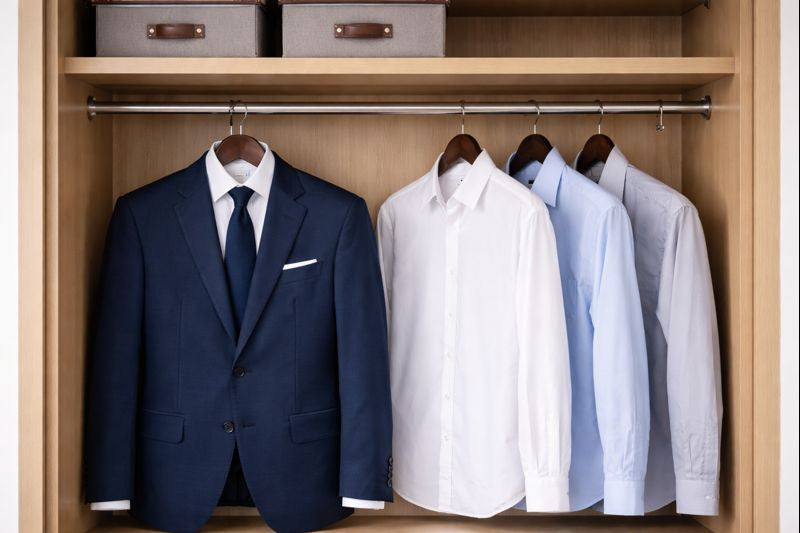
A navy suit is the closest thing menswear has to a cheat code. It works for interviews, weddings, client meetings, and dinners. The only place people regularly fumble it is the shirt. Not because the options are complicated, but because small color choices change the whole vibe.
This guide breaks down the best dress shirt colors to wear with a navy suit, why they work, and how to choose based on the occasion, your skin tone, and the level of formality you want.
Start with what navy actually does
Navy sits in a sweet spot: darker than blue, softer than black. It reads professional without feeling severe, and it plays well with both warm and cool tones. That flexibility is why a navy shirt can handle a lot of shirt colors, but it is also why the wrong shirt can look “almost right” and still feel off.
The goal is contrast that looks intentional. Too little contrast and the outfit goes flat. Too much contrast and it starts to look like a uniform.
The best default: white
If you want the most reliable dress shirt, it is white. A crisp white dress shirt creates clean contrast, photographs well, and works in every formal setting.
White with navy also gives you maximum flexibility with ties. From conservative solids to patterned ties, everything has room to breathe. If you have one navy suit and you need it to cover most situations, white is the shirt that makes that possible.
When white works best: interviews, formal meetings, weddings, events with cameras, any time you want sharp and safe.
The smartest alternative: light blue
Light blue is the “I know what I’m doing” option. It is less stark than white, still professional, and it complements navy without looking like you tried too hard.
This pairing works especially well in daytime settings and business environments where you want polished but not rigid. It also flatters a lot of skin tones because it stays in the same cool family as the suit but still provides separation.
When light blue works best: office days, client meetings, conferences, daytime weddings, most business casual environments.
Soft, understated, and modern: pale pink
Pale pink has a reputation for being bold, but in reality it is one of the most wearable shirt colors with navy. It adds warmth, looks refined, and reads modern without being flashy.
The key is keeping it pale and clean. Bright or saturated pink can look loud fast. A soft blush or dusty pink looks intentional and pairs easily with navy, brown shoes, and subtle ties.
When pale pink works best: weddings, dinners, creative offices, networking, any time you want a little personality without losing professionalism.
Calm and elegant: light gray
Light gray shirts are underrated with navy. They offer a softer contrast than white while keeping the outfit streamlined. They also play well with monochrome tie choices and minimalist styling.
The pitfall is choosing a gray that is too dark. If the shirt gets close to the suit tone, you lose contrast and the outfit can look heavy. Keep it light enough that the collar and cuffs still stand out.
When light gray works best: winter events, evening business settings, minimalist looks, situations where you want subdued polish.
Subtle pattern shirts: yes, but keep it controlled
Patterns can look great with navy, but they should be quiet. Think fine stripes, small checks, or a subtle micro pattern. The suit is already doing the heavy lifting. The shirt should add texture, not become the centerpiece.
The most foolproof pattern with navy is a light base with a thin stripe in blue or gray. It keeps the look professional and gives you a bit more depth than a solid.
When patterned shirts work best: regular office wear, repeat suit usage when you want variety, meetings where you want to look sharp but not formal.
What to avoid, or at least handle carefully
Some shirt colors are not “wrong,” but they require more control.
Black shirts with navy often look harsh and can feel dated. Bright, saturated colors usually read less professional. Very dark shirts can kill contrast and make you look swallowed by the suit. Pure yellow is tricky with navy because it can look loud and fight the suit’s cool tone. Strong greens can work, but they are harder to pull off in conservative settings.
If you want to experiment, do it with subtle versions first: muted tones, softer saturation, and cleaner fabrics.
Match the shirt to the occasion first
A quick way to choose the right shirt is to start with formality.
For interviews and conservative business: white or light blue. For weddings: white, light blue, or pale pink depending on time of day and vibe. For evening events: white or light gray. For everyday office: light blue and subtle patterns are the easiest rotation.
If you are presenting or being photographed, err on the side of clean contrast. Cameras love simple color relationships.
Consider skin tone and contrast
A shirt color can be “correct” and still look wrong on someone’s face. The fix is usually contrast.
If you have higher contrast features: dark hair, darker eyes, or deeper skin, white and crisp light blue often look especially sharp. If you have lower contrast features: lighter hair, softer coloring, very fair skin, light blue and pale pink can look less harsh than stark white. For warm undertones, pale pink and warmer whites often flatter. For cool undertones, light blue and crisp white tend to shine.
Do not overthink it. The best test is to stand in natural light and see whether your face looks fresh or washed out.
Fabric and finish matter more than people think
A navy suit is smooth and refined. Pair it with a dress shirt fabric that matches that level. Crisp poplin, broadcloth, and fine twill are safe bets. Heavier Oxford cloth can work, but it reads more casual and can reduce the suit’s formality.
Also, make sure the shirt is actually a dress shirt: collar holds its shape, cuffs are clean, and the fit is sharp at the shoulders. A great color cannot rescue a sloppy collar.
Tie and shoe harmony in one paragraph
Once the shirt is chosen, keep the rest simple. Navy suits work best with dark brown, medium brown, or black shoes depending on the setting. White shirts can take almost any tie. Light blue shirts pair well with navy ties, burgundy ties, and textured ties. Pale pink shirts work nicely with navy, charcoal, and deep plum tones. Light gray shirts pair well with black or charcoal ties and minimalist accessories.
If you want a clean look, keep the tie darker than the shirt and let the suit be the anchor.
Bottom line
For a navy suit, the best shirt colors are classic for a reason. White is the sharpest and most formal. Light blue is the most versatile for everyday business. Pale pink adds warmth and modern polish when you want personality. Light gray delivers a calmer, understated look, especially in the evening. Subtle patterns work too, as long as they stay quiet.
Choose based on the occasion, keep contrast intentional, and you will look like you meant it, every time.