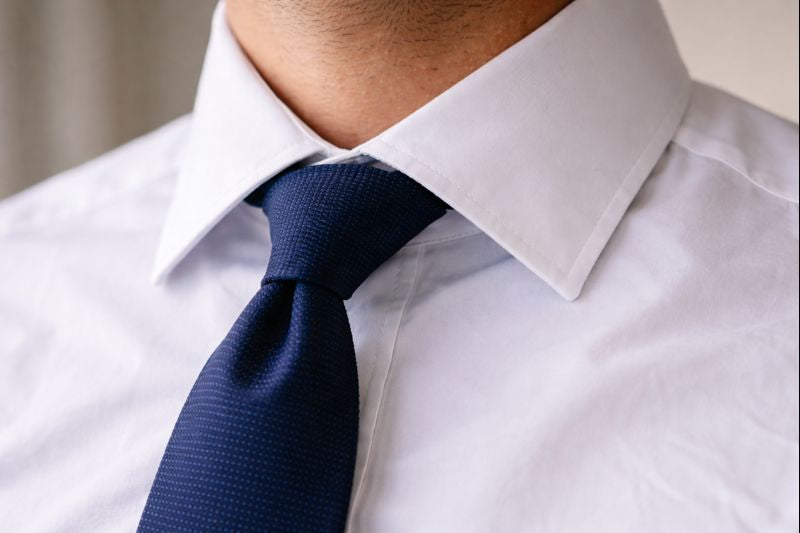
A “non-iron” dress shirt sounds like a miracle product.
Wash it, dry it, put it on, walk out the door looking crisp. No ironing board. No wrestling with a steamer. No last-minute panic because a sleeve looks like an accordion — and it always looks good with a nice business suit.
Sometimes that promise is real. Sometimes it is marketing. Often, it is a little of both.
This guide explains what non-iron actually means, how it differs from “easy-care,” what the fabric is doing behind the scenes, and how to buy the right shirt for the way a person actually lives.
What “Non-Iron” Really Means
A true non-iron dress shirt is designed to look smooth after washing and drying, with little to no pressing required.
That does not mean it comes out of the dryer looking like it was pressed at a shirtmaker’s workshop. It means the fabric is treated so it resists wrinkling and recovers its shape more easily than untreated cotton.
In practical terms, a non-iron shirt should be:
-
Wearable straight from a hanger after drying
-
Smooth enough that most people would not bother ironing it
-
Consistently crisp at the collar and placket compared to regular cotton
The important word is “designed.” Non-iron is not only about the weave or the thickness of the fabric. It is usually the result of a finishing process applied during manufacturing.
How Non-Iron Shirts Work
Cotton wrinkles because its fibers bend and stay bent. After washing, all those tiny bends set into the fabric as it dries.
Non-iron shirts fight that in two ways.
First, many use cotton yarns and weaves that naturally wrinkle less or recover better. Some weaves have more structure and bounce back more easily than others.
Second, and more importantly, non-iron shirts usually involve a chemical resin finish that helps the fibers keep their shape. The treatment encourages the fabric to spring back toward smoothness instead of locking into wrinkles.
That is why two shirts that look similar can behave totally differently after a wash. The difference is often in the finishing process, not in anything obvious to the eye.
What “Easy-Care” Means And Why It Is Different
Easy-care is the looser, less strict cousin of non-iron.
An easy-care dress shirt is meant to wrinkle less than a standard cotton shirt and be simpler to maintain. It still usually looks better with a quick iron or steam. It is not necessarily designed to be worn straight from the dryer.
Think of the categories like this:
Non-iron: intended to look smooth without pressing.
Easy-care: intended to need less pressing than normal, not necessarily none.
That distinction matters because many brands use the terms casually. Some shirts labeled “easy-care” perform like true non-iron. Some shirts labeled “non-iron” still need a light press to look sharp, especially at the collar and cuffs.
The label gives a clue, but the construction and care routine decide the real outcome.
Non-Iron vs Easy-Care: What Changes In Real Life
The difference is easiest to feel in a typical week.
With a true non-iron shirt, the morning routine is faster. The shirt can be washed, dried, hung, and worn with minimal fuss. This is especially helpful for travel, busy work weeks, and anyone who simply does not want laundry to become a project.
With an easy-care shirt, the experience is more like this: it looks decent out of the dryer, but a bit of wrinkling remains. The shirt still benefits from a quick steam or iron, particularly if it will be worn under a blazer or with a tie.
The second difference is consistency. Non-iron shirts tend to deliver more predictable results. Easy-care performance can vary a lot based on how the shirt is washed, how it is dried, and how quickly it is removed and hung.
If a person is looking for the least effort possible, non-iron is usually the better bet. If they do not mind touching up a shirt occasionally, easy-care can be perfectly fine and sometimes feels more natural.
The Pros And Cons People Do Not Hear Enough About
Non-iron shirts are popular for good reasons, but they are not perfect. Understanding the trade-offs prevents disappointment.
The Pros
A good non-iron shirt saves time. That is obvious, but it is also about reducing friction. When clothing requires less maintenance, it gets worn more. It becomes part of a reliable routine instead of a special-occasion piece.
Non-iron shirts also tend to look crisp. The placket stays straighter. The fabric often holds a cleaner line through the torso. For office wear, that “put together” look is the whole point.
The Cons
Some non-iron finishes can change how the fabric feels. Depending on the quality, a shirt can feel slightly stiffer or less breathable than untreated cotton. Higher-end non-iron shirts are better at avoiding that plasticky hand feel, but it is still a variable worth considering.
Another consideration is longevity. Finishes can wear down over time. After many washes, even a great non-iron shirt may start behaving more like easy-care.
There is also the question of sensitivity. A small number of people prefer to avoid certain chemical finishes on skin-contact fabrics. For those buyers, untreated cotton, high-twist weaves, or other wrinkle-reducing options may be a better choice.
None of this means non-iron is a bad idea. It just means the best shirt is the one that matches priorities: convenience, feel, breathability, or maximum crispness.
How To Tell If A Shirt Is Truly Non-Iron
The easiest way is to look past the marketing and focus on what the shirt claims in plain terms.
If a brand says “wash, dry, hang, wear,” that is a stronger non-iron claim than “wrinkle-resistant” or “easy-care.”
Fabric composition also matters. Most non-iron shirts are primarily cotton, but blends can improve wrinkle resistance. Some blends feel great and perform well. Others can trap heat or look slightly less refined. It depends on the blend quality and the weave.
Construction matters too. Even the best fabric will look sloppy if the collar is weak or the placket is flimsy. A shirt can be wrinkle-resistant and still look cheap if the structure is not there.
A practical test is simple: if possible, look for reviews that mention whether the shirt is wearable without ironing. Brands rarely say “this still needs pressing.” Customers will.
Getting The Best Results At Home
The label is only half the story. The routine matters.
Most non-iron and easy-care shirts perform best when:
They are removed from the dryer promptly.
They are shaken out lightly and hung on a proper hanger.
They are allowed to cool and settle before being worn.
Leaving shirts crumpled in a laundry basket defeats the point of wrinkle resistance. The fabric can only recover if it is allowed to relax.
Dryer heat also matters. Excessive heat can bake wrinkles in. Medium heat or low heat with a longer drying time often produces a smoother result.
If ironing is needed, it is usually minimal. A quick pass on the collar, cuffs, and placket is often enough. That is the real value: fewer minutes spent pressing the entire shirt.
Who Should Choose Non-Iron And Who Should Choose Easy-Care
Non-iron makes the most sense for people who value speed and reliability.
It is a strong choice for:
-
Busy professionals who wear dress shirts often
-
Anyone who travels and needs shirts to behave out of a suitcase
-
People who dislike ironing enough that they avoid wearing dress shirts at all
Easy-care makes sense for people who want improvement without sacrificing the feel of classic cotton.
It works well for:
-
People who wear dress shirts a few times a month
-
Anyone who is fine with a quick steam before big meetings
-
Buyers who prioritize breathability and softness over maximum wrinkle resistance
In other words, non-iron is about eliminating the chore. Easy-care is about reducing it.
What To Look For When Buying A Non-Iron Shirt
The best non-iron shirt is not the one with the loudest claim. It is the one that looks crisp and feels comfortable.
A few points matter more than people think.
Collar quality: A strong collar is what makes the shirt look sharp on camera and in person.
Fabric hand feel: It should feel smooth and breathable, not stiff and coated.
Fit: Wrinkle resistance does not fix a shirt that is too tight or too loose.
Color: White and light blue tend to show wrinkles less than darker solids; patterns can hide minor creases but can also look busier under office lighting.
If a shirt checks those boxes and reliably comes out of the wash looking clean, it is doing its job.
Conclusion: The Simple Difference
A non-iron dress shirt is designed to look smooth with minimal effort. An easy-care shirt is designed to wrinkle less than normal and press more easily.
The best choice depends on what matters most.
If the goal is to reduce friction and get dressed faster, non-iron is the better tool. If the goal is a more natural cotton feel with lighter maintenance, easy-care is often enough.
Either way, the real win is not chasing perfection. It is finding shirts that stay crisp enough to support the day, without turning laundry into a weekly battle.