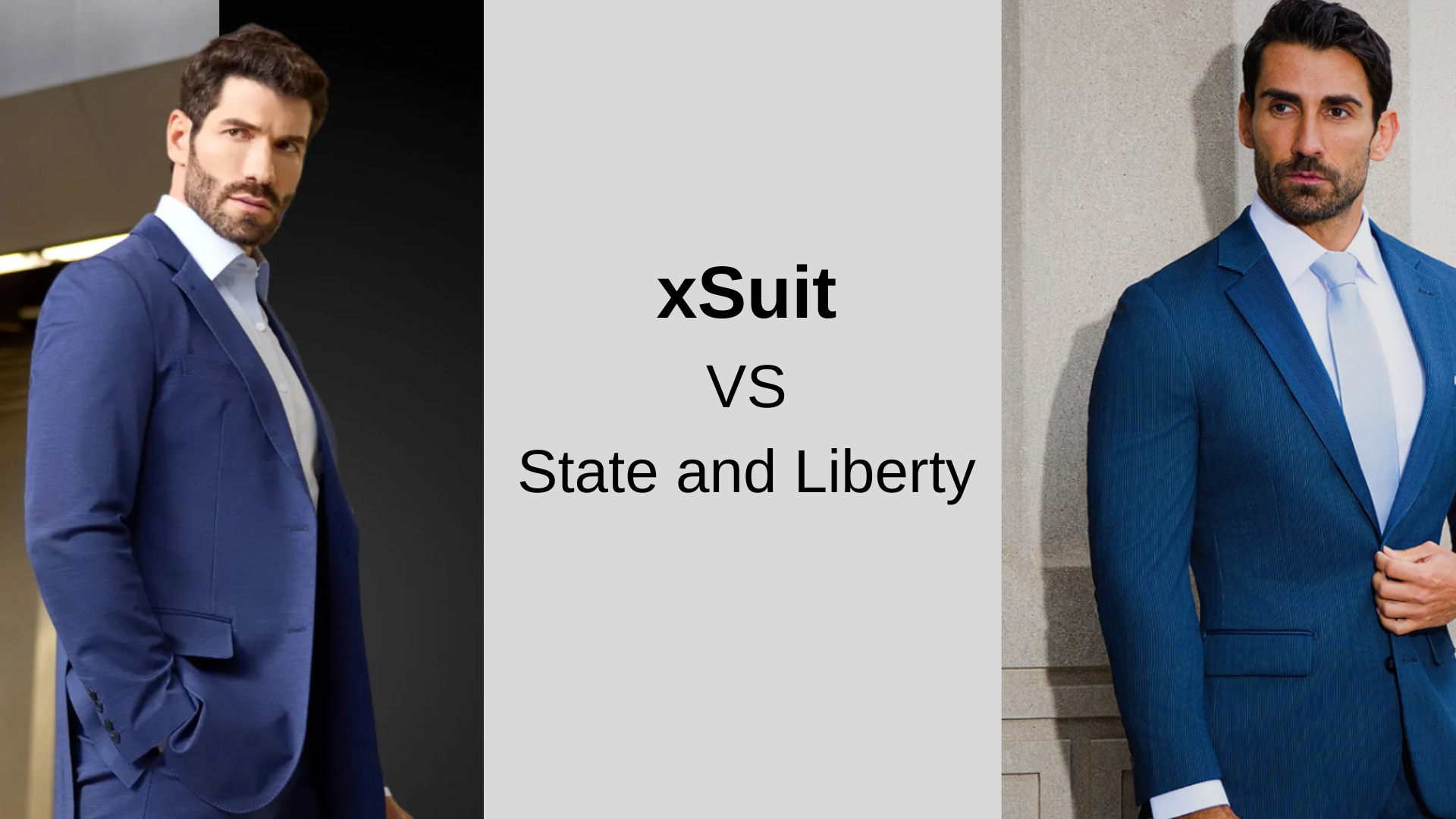
Suit shopping is one of the few purchases where the price range is so wide it's genuinely confusing. You can find a suit for $150 at a department store, or you can find one for $15,000 at Kiton in Naples. Between those two points, there's a huge middle ground where most working professionals actually shop, and $500 sits at a specific position within it that's worth understanding.
So is a $500 suit worth it? The honest answer depends on what's actually inside the price tag. Here's a practical look at what you're really paying for at that level, what you're giving up compared to higher-end options, and how to know whether it's the right spend for your situation.
What the Suit Market Actually Looks Like at Different Price Points
To answer whether $500 is worth it, you first need context on where that number sits in the broader market.
Menswear authorities have written extensively about the tiers. Gentleman's Gazette's breakdown of a $100 suit versus a $1,000 suit lays out the differences clearly: at $100, you're getting cheap fabric, minimal construction, and a garment that's essentially disposable. At $1,000, you're getting decent fabric, better construction, more skilled labor, and something that can last years with proper care. The middle ground between them, roughly $300 to $700, is where the majority of quality ready-to-wear suits actually live.
At $500, you're firmly in that middle band. You're not paying for handwork, rare fabrics, or full canvas construction (all of which start showing up more consistently above $1,000). You're paying for real fabric quality, decent construction, and increasingly, technology.
xSuit's own guide to the top luxury suit brands in the world provides useful context on the top end of the market for comparison. Brands like Kiton, Zegna, and Canali sit at very different price points from ready-to-wear performance suits, and understanding what they offer helps clarify what a $500 suit is (and isn't) trying to be.
Where the Money Actually Goes in a $500 Suit
The single biggest cost driver in any suit is fabric. A meaningful percentage of what you pay at $500 goes into the material itself. Cheaper suits use short-staple wool or polyester blends that pill quickly and lose shape. Better suits use longer-staple wool, wool blends, or (increasingly) performance-engineered fabrics that combine natural fibers with technical properties.
The second biggest cost is construction. This is one of the least understood parts of suit pricing, and it's where most of the gap between cheap and mid-range suits actually lives. xSuit covers this in their guide to canvas versus unconstructed suit construction. The short version: cheap suits use fused construction (glue holding the front of the jacket together), which is fast and inexpensive but breaks down over time. Mid-range suits use half canvas or specialized modern construction techniques. High-end suits use full canvas, which is hand-stitched and takes 10 or more hours per jacket.
The third cost bucket is labor, and this is where the price differences get sharpest. A suit made in a factory in Southeast Asia costs less to produce than one made in Italy or the UK. Neither is automatically worse (a well-managed factory can produce excellent quality), but labor costs alone can add several hundred dollars to a price tag without necessarily improving the garment.
Finally, at the higher end of the market, you're also paying for details: hand-stitched buttonholes, functional cuffs, pattern matching across seams, better linings, and fabric reserve for future alterations. Most of these don't appear in $500 suits at all.
What a Traditional $500 Suit Gets You
A traditional wool suit at $500 typically includes a decent worsted wool fabric (100% wool or a high-percentage wool blend), half-canvas or partially fused construction, machine stitching throughout, and standard details like sealed pockets and basic buttonholes. The jacket will have a shoulder pad and chest canvas that give it structure. The pants will have standard construction with a hem you'll need to have finished.
That's a real suit. It'll look sharp when it's fresh, hold up to occasional wear for a few years, and pass in almost any business setting. It won't look bespoke, and it won't have the drape or feel of a $2,000 suit, but it also won't look cheap.
The main tradeoff at this price point in traditional suiting is that fused construction (or partial fusing) starts to show wear after enough dry cleanings. The suit begins to look tired around year three or four, and the front of the jacket can start to bubble or delaminate. Traditional wool at this price also needs regular dry cleaning to stay presentable, adding real ongoing cost to the purchase.
What a Performance $500 Suit Gets You Differently
Here's where the market has shifted in the last several years. Performance suits at the $500 price point don't spend their money the same way traditional suits do.
Instead of allocating the budget toward classic construction details, brands like xSuit put the money into engineered fabric and technology. The xSuit 5.0, for example, uses a proprietary TechWool blend (a wool-based fabric with built-in four-way stretch, wrinkle resistance, breathability, and machine washability). The xSuit technology page breaks down the specific engineering: nanotechnology coating for stain and liquid resistance, seam sealing for durability, and fabric-level testing including 15,000 to 25,000 revolutions of abrasion cycling to simulate daily wear.
The tradeoff is real. You're not getting hand-stitched details or full canvas construction. You're getting a suit that's genuinely built for daily wear: something you can travel with, spill coffee on, and machine wash at home. For someone who wears a suit regularly, the practical value of that shift is significant.
The question isn't which approach is better in the abstract. It's which one fits how you actually wear a suit.
When a $500 Suit Is Actually Worth It
A $500 suit is worth it when it's calibrated to how you'll actually use it. That sounds obvious, but it's where most bad purchases happen.
For someone who wears a suit heavily (several times a week for work, travel, client meetings, or events), the math strongly favors either a traditional mid-range suit with good construction or a performance suit built for wear. Both deliver real value at $500. A traditional suit at this price will look great when fresh but will need dry cleaning and start showing wear after a few years. A performance suit will handle daily wear more comfortably and cost far less to maintain over the same period.
For someone who wears a suit only a few times a year (occasional weddings, family events, the rare interview), a $500 suit might actually be more than you need. A $200 to $300 suit will look nearly identical to observers, get worn so infrequently that construction limitations don't matter, and free up budget for other things. Overspending on a low-frequency-use suit is one of the most common mistakes in menswear.
For someone building their first serious professional wardrobe, $500 is a genuinely good starting point. It's enough to get a suit with real fabric quality and construction (or real fabric technology) that will hold up to regular wear while you figure out what your actual style preferences are.
What You're Giving Up At the $500 Price Point
To be honest about the tradeoffs, a $500 suit doesn't compete with a $1,500 or $2,000 suit on several specific fronts.
You're giving up handwork and the details that come with it. Hand-stitched lapels, functional buttonholes on the cuffs, pattern matching across seams, and monogrammed linings all show up more consistently above $1,000. You're also giving up fabric reserve for future alterations. Higher-end suits are cut with extra fabric in the seams so a tailor can let them out over time. Cheaper suits (including many $500 suits) aren't. And you're giving up the specific look of full canvas construction, which develops a subtle roll along the lapel and molds to your body over years of wear.
For performance suits specifically, you're also generally giving up tailorability. xSuit's laser-cut, thermo-fused construction is what makes machine washability possible, but it also means the suit can't be significantly altered beyond hemming the pants.
Whether these tradeoffs matter depends entirely on what you value. For most working professionals, they don't matter much. For someone who genuinely appreciates traditional tailoring and plans to keep and alter a suit for decades, the higher price starts to justify itself.
Is a $500 Suit Worth It: Making the Call For Your Situation
The honest answer to whether a $500 suit is worth it comes down to two questions. How often will you actually wear it, and what do you want it to do for you?
If you wear a suit regularly and want something that combines real fabric quality, modern construction, and practical daily-wear features (machine washable, wrinkle resistant, comfortable for long days), then a performance suit like the xSuit 5.0 at $499 delivers exactly that. The money is going into engineered fabric and technology that solve real problems: no dry cleaning bills, comfortable long hours, sharp appearance on demand, and the ability to travel without a garment bag steamer routine.
If you want traditional tailoring, hand-stitched details, or a suit you'll keep and alter for twenty years, $500 isn't quite enough to get there, and it might be worth saving for the $1,000-plus tier or shopping vintage for higher-end construction at lower prices.
Either way, the more important question isn't the price. It's whether you understand what you're paying for. A $500 suit that fits your actual needs is genuinely worth it. A $500 suit bought without a clear reason is just another closet occupant. Know what you want the suit to do, understand what's inside the price, and the call gets a lot easier.