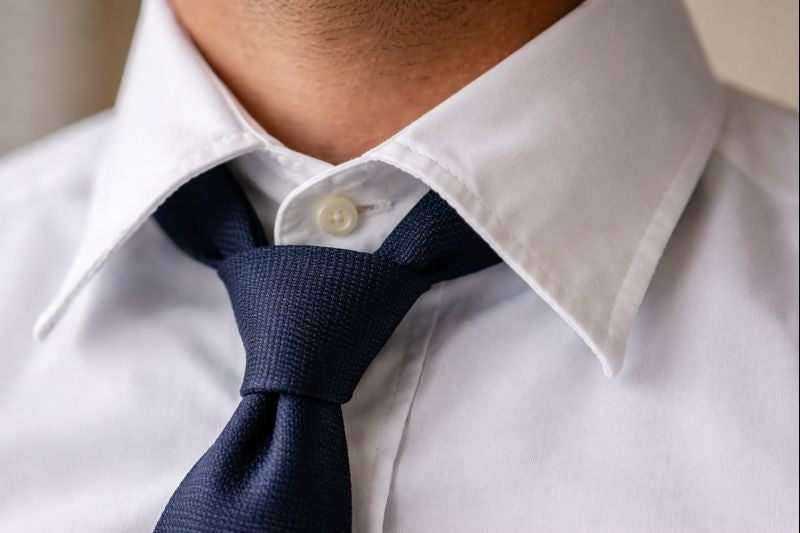
Dress codes have relaxed, but expectations have not disappeared. Terms like “smart casual” and “business casual” show up on invitations, job descriptions, and office policies regularly, yet both are often blurred together. That confusion leads to outfits that feel either overdressed or underdone.
There is a clean way to think about it:
-
Business casual: starts from classic office wear and relaxes it slightly.
-
Smart casual: starts from casual clothing and sharpens it.
Same pieces can often appear in both wardrobes, but the intent, structure, and styling are different. Understanding that difference turns dress codes from a guessing game into something much easier to control. With the guide below you will learn what to wear in each setting, be it a full men’s suit, or something a little more relaxed.
Definitions: Smart Casual vs Business Casual
Business Casual
Business casual is rooted in professional environments. It removes the full suit and tie requirement, yet stays clearly office-ready. Structure remains important; formality is softened, not abandoned.
Typical elements:
-
Collared shirts: dress shirts, OCBDs, or neat polos in some workplaces.
-
Tailored trousers: chinos or wool dress pants instead of jeans.
-
Optional jacket: blazer or sport coat that sharpens the silhouette.
-
Leather shoes: loafers, derbies, brogues; sneakers only in very modern offices.
The overall impression: polished, credible, and appropriate for meetings, presentations, and most in-person workdays.
Smart Casual
Smart casual begins on the casual side and moves upward. It keeps comfort and personality while adding sharper pieces, better fits, and more intentional color choices.
Typical elements:
-
Tops: knit polos, structured tees under a blazer, casual button-downs, lightweight sweaters.
-
Bottoms: chinos, tailored jeans, refined drawstring trousers.
-
Layers: unstructured blazers, overshirts, cardigans, sleek jackets.
-
Footwear: minimalist sneakers, loafers, Chelsea boots, clean derbies.
The overall impression: relaxed but considered, ideal for dinners, creative offices, offsites, and social events where effort matters but full business wear would feel excessive. You could even try mixing and matching suit colors when it comes to smart casual.
Level of Formality: Where Each Dress Code Sits

A simple mental ladder helps place each dress code correctly:
Casual → Smart Casual → Business Casual → Business Formal
Smart Casual on the Scale
Smart casual sits above everyday casual. Denim can appear if it is dark, clean, and well-fitted. Jackets are softer: unstructured blazers, Harringtons, or overshirts. Shirts can be more relaxed: polos, knits, or casual button-downs.
-
Relaxed enough for bars, dates, or informal office days.
-
Still intentional enough that the outfit looks planned rather than improvised.
Business Casual on the Scale
Business casual sits between smart casual and full business formal. It retains more of the office DNA: structured collars, sharper trousers, and more traditional shoes. Denim, if allowed at all, is usually the exception, not the rule.
Formality level:
-
Suitable for client meetings, interviews at modern offices, conferences, and most workplace scenarios where a full suit is not required.
-
Clearly communicates professionalism, even when the tie stays in the drawer.
Understanding where each code lives on that spectrum makes it much easier to aim correctly: smart casual for elevated off-duty; business casual for relaxed professionalism.
Smart vs Business Casual: The Core Differences
Smart casual and business casual often share similar pieces; what changes is how those pieces are used. The intention behind the outfit is what separates the two.
Business casual answers to a professional context first: credibility, polish, and appropriateness for workplace expectations.
Smart casual answers to a social or flexible context first: personality, ease, and a sense of effort without stiffness.
Key differences:
-
Starting point:
-
Business casual: begins with traditional office wear; removes the tie or relaxes fabrics.
-
Smart casual: begins with casual wear; adds sharper elements such as a blazer or leather shoes.
-
Structure:
-
Business casual: more structured collars, tailored trousers, and formal shoes.
-
Smart casual: softer jackets, casual knits, and more relaxed footwear.
-
Color and pattern:
-
Business casual: favors neutrals and muted tones with subtle patterns.
-
Smart casual: more freedom in color, texture, and pattern, as long as the overall look stays considered.
-
Formality level:
-
Business casual: suitable for meetings, office days, and semi-formal work events.
-
Smart casual: better for dinners, dates, weekends, creative workplaces, and networking events outside traditional offices.
Thinking in terms of purpose makes choices simpler: business casual is about professional trust; smart casual is about polished personality.
Building a Business Casual Outfit
Starting from the Shirt
The shirt sets the tone. A clean, well-fitted shirt does most of the work before a jacket or tie ever enters the picture.
Strong options:
-
Solid white or light blue dress shirts
-
Subtle stripes or micro-checks
-
High-quality polos in muted shades for more relaxed offices
Fit matters: shoulders aligned with the natural shoulder line, sleeves at the wrist bone, and enough room to move without excess billowing at the waist.
Trousers and Layers
Pairing focuses on structure with comfort.
-
Trousers:
-
Chinos in navy, tan, olive, or stone
-
Wool or wool-blend dress pants in grey, charcoal, or subtle patterns
-
Layers:
-
Blazers or sport coats for added authority
-
Fine-gauge sweaters layered over a collared shirt in cooler weather
The goal is a silhouette that feels tailored but not rigid.
Footwear and Finishing Touches
Shoes can quickly raise or lower the perceived formality of a look.
Reliable choices:
-
Leather oxfords or derbies for sharper days
-
Loafers for a slightly relaxed yet still professional impression
-
Clean, minimal belts that match shoe leather
Accessories should be restrained: a watch, perhaps a simple pocket square in more formal offices, and minimal jewelry.
Building a Smart Casual Outfit
Building from Casual Up
Smart casual starts with comfortable, everyday pieces, then layers structure and intentional detail on top.
A base can be as simple as:
-
A high-quality T-shirt or knit polo
-
An Oxford or casual button-down
-
Chinos or dark, well-fitted jeans
From there, one structured element is added: a blazer, overshirt, or sleek jacket.
Smart Casual Layers and Footwear
Smart casual layers are less formal but still sharp.
-
Layers:
-
Unstructured blazer in cotton or knit fabric
-
Lightweight bomber, Harrington, or field jacket
-
Overshirt in twill or wool-blend for cooler days
-
Footwear:
-
Minimal leather or suede sneakers
-
Loafers or desert boots
-
Slim Chelsea or lace-up boots
The result should feel relaxed but clearly deliberate: nothing oversized, nothing sloppy, nothing that looks pulled directly from a gym bag.
Adding Character Without Overdoing It
Smart casual is where texture and color can take small risks. Knits, interesting weaves, and richer hues like forest green, rust, or burgundy fit comfortably here. Patterns are welcome, as long as they do not compete with each other.
The outfit should still be cohesive: one statement piece at most; everything else in supporting roles.
Common Mistakes to Avoid
Even with clear definitions, it is easy to slip off target. Some frequent missteps include:
-
Treating “casual” as “anything goes” and wearing athletic shoes or graphic tees in business casual environments
-
Copying full business looks for smart casual events, which can feel too stiff and out of place
-
Mixing too many patterns or loud colors, leaving the outfit without a focal point
-
Ignoring fit and condition: wrinkled shirts, worn-out shoes, and baggy trousers undermine both dress codes
Both smart and business casual rely more on intention than strict rules. Clean lines, good fabric, and clothes that are clearly cared for do most of the heavy lifting.
How Workplace and Industry Change the Rules
Dress codes do not live in a vacuum. Industry, company culture, and geography all influence what “smart” or “business” looks like in practice.
-
Traditional fields: finance, law, and certain corporate roles lean closer to classic business casual. Here, dress shirts, tailored trousers, and leather shoes remain the standard.
-
Creative and tech environments: often accept smart casual as default. Unstructured blazers, refined sneakers, and elevated knitwear are common.
-
Hybrid and remote work: blur the lines. Someone may default to smart casual most days, then step up to business casual for on-site meetings or important presentations.
Observing what senior leadership wears, and how people dress on important days versus regular days, often clarifies which side of the spectrum is expected.
Knowing Dress Codes For Men
Smart casual and business casual are close neighbors on the formality scale, but they speak slightly different languages. Business casual prioritizes professionalism with a relaxed edge. Smart casual prioritizes ease and personality, refined just enough to feel intentional.
With clear definitions, a few reliable building blocks, and performance-focused tailoring in the mix, moving between the two becomes straightforward: adjust the structure, dial the color and texture up or down, and let fit and fabric do the quiet work of making every outfit look considered.